About David Jacobson
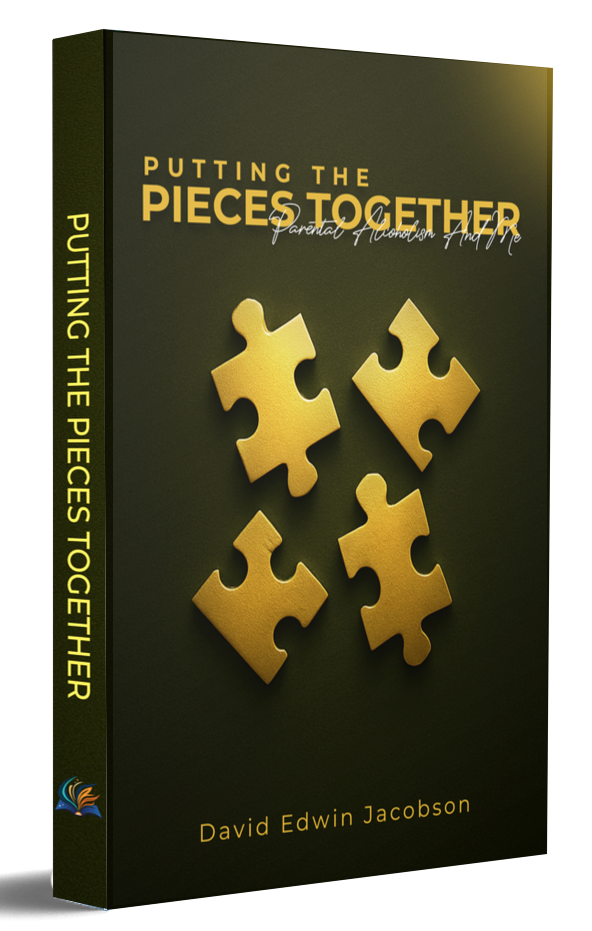
A Memoir of Resilience and Restoration
“Putting the Pieces Together” is more than a memoir—it’s a roadmap for anyone who has ever felt broken, abandoned, or beyond repair. David Jacobson’s unflinching honesty about his traumatic childhood is matched only by his message of hope: that no matter how shattered your beginning, you can build a beautiful life.
Born in 1937 San Francisco to alcoholic parents, David’s early years were marked by abandonment, institutional care, and the lasting effects of polio. Yet through it all, he gathered the “pieces” of his life—the good, the bad, and the ugly—and assembled them into a complete picture of triumph over adversity.
Book Details
Publication Date
2025
Journey Locations
San Francisco, Denver, Albuquerque, Bartlesville, Sun City (Texas), Oklahoma City
The Story: Gathering the Pieces
The Fractured Foundation
David’s story begins in the most difficult way: a childhood dominated by parental alcoholism. His mother, overly sensitive and prone to drinking when hurt, and his father, frustrated by his own limited opportunities and drinking to cope, created an environment where young David and his brother Billy had to fend for themselves.
The book vividly recounts nights when David, completely unsupervised while his parents lay passed out, would take money from their pockets and feed himself at restaurants. He describes the strange freedom of being a child with no one watching, yet the deep loneliness of having no one caring.
Institutions and Kindness
From detention centers to hospital wards, from Edgewood Orphanage to various foster situations, David’s childhood was spent in institutions. Yet within these places, he found unexpected grace. The book introduces us to Miss Ely, the beautiful young nurse who became his “girlfriend” and showed him kindness when his own parents wouldn’t visit. We meet the five families who brought him gifts in the hospital. We see the house mother at Edgewood who provided structure and stability.
These encounters taught David a profound lesson: that strangers can become family, and that goodness exists even in the midst of great suffering.
Finding His Way
The book traces David’s journey from his difficult childhood through military service in the Air Force—a period that provided him with structure, purpose, and a way forward. His time in the service marks a turning point where he begins to take control of his own narrative.
Then came the most transformative piece: meeting Glenda. Their 67-year marriage becomes the foundation upon which David finally builds the stability he never had. Together, they create a family, pursue education, build careers, and eventually retire to what David calls “the good life in Texas.”
The Complete Picture
Throughout the memoir, David returns to his central metaphor: putting the pieces together. Each chapter represents another piece of his life—some broken, some beautiful, all essential. The book shows how seemingly random experiences, both painful and joyful, come together to form a complete and meaningful life.
The narrative moves from the “somber” early years to the joy of later life—adventures, relationships, professional achievements, retirement pursuits including RVing and digital art. The arc demonstrates that while you cannot change your beginning, you absolutely can determine how your story unfolds.
Key Messages
Themes of Restoration
No matter how dire your circumstances, you can find a way through. David’s story proves that resilience is not about being unbreakable—it’s about refusing to stay broken.
Kindness Matters
The strangers who showed David compassion—nurses, social workers, families, teachers—became crucial pieces in his restoration. We never know how our smallest acts of kindness might change someone’s entire trajectory.
You Can Build Something Beautiful
David’s 67-year marriage, his children, his career success, his creative pursuits—all were built from the broken pieces of his childhood. Your past does not dictate your future.
Every Piece Has Purpose
Even the painful pieces of our lives can become part of something meaningful. David shows how understanding and accepting all parts of your story—not just the good ones—creates wholeness.
Who Should Read This Book
Survivors of Trauma
Anyone who has experienced childhood abuse, neglect, or abandonment will find validation and hope in David’s story. His honesty about the lasting effects of trauma, paired with his message that healing is possible, offers a roadmap for recovery.
Those Facing Adversity
Whether dealing with addiction (your own or a loved one’s), health challenges, financial hardship, or simply feeling overwhelmed by life’s difficulties, David’s story demonstrates that resilience is available to everyone.
Caregivers and Professionals
Social workers, counselors, teachers, medical professionals, and anyone who works with vulnerable populations will gain insight into the lasting impact of their compassion and the importance of seeing the humanity in those they serve.
Anyone Seeking Inspiration
David’s story is ultimately one of hope and human resilience. It’s for anyone who needs to be reminded that where you start doesn’t determine where you finish, and that every life has the potential for meaning and joy.
Who Should Read This Book
Throughout the book, readers will discover David’s original digital artwork. These pieces, created over many years, include maps showing where key events occurred, abstract compositions reflecting the emotional landscape of his journey, and vibrant, joyful scenes representing his later years of fulfillment.
The artwork serves as a visual metaphor for the book’s central theme: taking the fragments of experience and transforming them into something cohesive and beautiful.
Start Reading Today
Begin your journey through David’s remarkable story of survival, love, and restoration. Discover how broken pieces can become something whole and beautiful.